AI is reshaping how health plans engage members, navigate care, and administer benefits. But the compliance challenges of AI in healthcare are outpacing many companies’ ability to address them.
The risks aren’t always obvious. Some vendors arrive with sophisticated AI capabilities but without the organizational depth that comes from years of handling protected health information at scale. Others have solid compliance credentials but are bolting AI onto legacy architectures without the governance frameworks to match. Others are marketing health-related uses for otherwise “general purpose” products. These profiles create exposure.
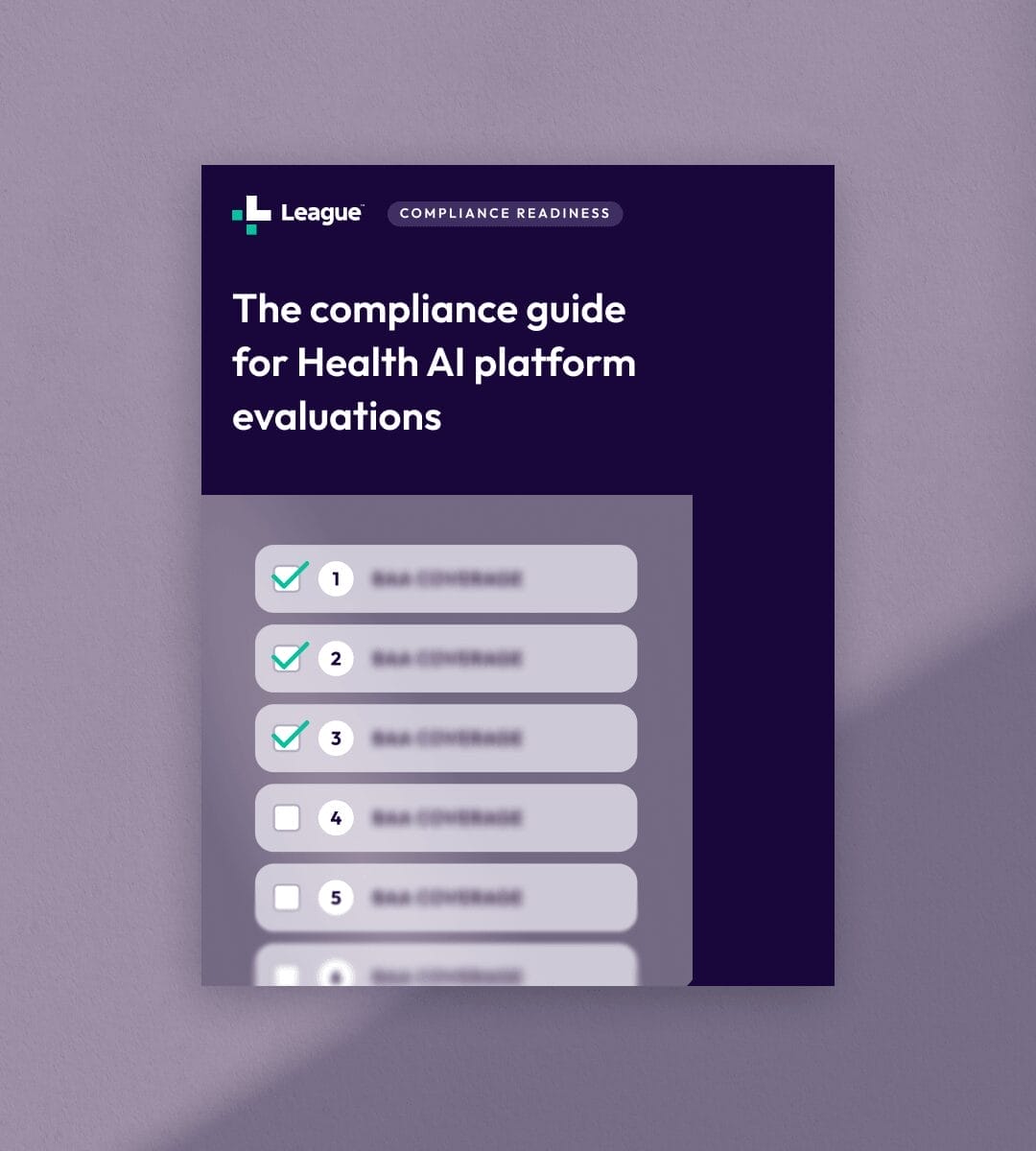
This checklist gives procurement and compliance leaders the questions to surface both failure modes — before a contract is signed.
In this guide, you’ll get:
- A 10-point compliance checklist designed for health AI vendor evaluations and internal audits
- A breakdown of the full compliance stack — HITRUST r1, SOC 2 Type 2, ISO 27001, NIST AI RMF, BAA coverage, and data sovereignty — and what each one actually requires
- Targeted questions on AI-specific governance challenges, including Test, Evaluation, Verification and Validation (TEVV), and PHI handling in AI processing pipelines
- A framework for identifying vendors with genuine compliance depth versus those still building the fundamentals while scaling on your data
The compliance challenges of AI in healthcare aren’t going away. The right vendor should be able to prove they’ve already solved them.